

Training to Support Wellbeing
The Keil Centre provides practical, evidence-informed training and workshops to help organisations support employee wellbeing, build resilience and manage the psychological demands of work.
Who's it for?
- Managers and leaders
- Teams
- Individuals
- Specialists: e.g., HR team members, or Wellbeing Champions
Benefits
- Expert facilitation
- Evidence-based content
- Interactive & engaging style
- Personal & collective resilience
- Flexible delivery with a worldwide reach
Find out more
What to learn more? Get in touch today.
Training to support wellbeing
The Keil Centre offers a comprehensive suite of evidence-based training courses, workshops and educational materials to help organisations promote wellbeing, strengthen resilience and support mental health at work.
Our workplace wellbeing training gives managers, teams and employees practical knowledge, skills and strategies that they can apply in their day-to-day working lives.
Training can cover a wide range of topics, from coping with pressure and building resilience to managing thoughts and emotions, preventing burnout and developing the confidence to have effective wellbeing conversations.
We can offer:

Off-the-shelf training
Established workshops and training courses covering key evidence-based workplace wellbeing topics.
Bespoke content
Training designed around your organisation, workforce and priorities, drawing on our extensive psychology expertise.
Flexible delivery
Courses can be delivered in person, virtually or as a blended experience, from bite-sized sessions and masterclasses to full-day workshops and longer programmes.
Online learning packages
Our offering includes online learning packages to complement facilitated training and provide ongoing learning or refresher opportunities.
Packages can include video and other media, interactive activities, knowledge assessments and client-supplied resources.
They can be hosted through most learning management systems or externally by The Keil Centre.
What can our wellbeing training cover?
Every organisation is different, so the content of our training can be adapted to your particular needs. Depending on the audience and objectives, topics can include:
Coping with pressure and stress
We help participants understand how pressure and stress can affect wellbeing, behaviour and performance.
Training can explore individual responses to pressure, recognising personal signs of stress, identifying common triggers and developing practical strategies for managing demands effectively.
Building personal resilience
Our resilience training helps people understand the factors that support their ability to cope, adapt and recover during challenging periods.
Participants can explore their own resilience, identify existing strengths and develop practical strategies to support their wellbeing in both the short and longer term.
Managing thoughts, emotions and responses
Our training can help participants understand how patterns of thinking influence emotions, behaviour and wellbeing.
We can introduce practical psychological techniques for recognising unhelpful thinking patterns, gaining perspective, managing emotional responses and responding more constructively to difficult situations.
Team wellbeing and collective resilience
An individual's resilience is closely connected to the team around them.
Our training can explore how teams support one another, maintain collective wellbeing and continue to work effectively during periods of pressure, uncertainty or organisational change.
Topics can include social support, team culture, sources of pressure and practical actions teams can take to strengthen resilience.
The manager's role in wellbeing
Managers play an important role in creating the conditions that support employee wellbeing.
Our training helps managers understand their role and responsibilities, recognise signs that someone may be struggling and respond appropriately and confidently.
Training can also explore how management style, communication, workload and team culture can influence employee wellbeing.
Having effective wellbeing conversations
Talking about wellbeing can sometimes feel difficult.
We help managers and employees build the confidence and practical skills needed to have supportive conversations about wellbeing, whether with peers, colleagues or direct reports.
Training can cover active listening, empathy, asking helpful questions, responding appropriately when concerns are raised and understanding the boundaries of the manager or colleague role.
Maintaining wellbeing during change
Organisational change, uncertainty and periods of increased workload can place additional pressure on individuals and teams.
We can provide targeted training to help people understand their reactions to change, manage uncertainty, maintain resilience and identify practical ways of protecting wellbeing and performance during challenging periods.
Preventing burnout and supporting sustainable performance
Training can help participants understand the factors that contribute to burnout and prolonged workplace stress.
We can explore early warning signs, risk and protective factors, recovery, boundaries and practical approaches that can help people maintain their wellbeing while continuing to perform effectively.
Specialist and bespoke training
Our multidisciplinary team allows us to develop specialist training across a broad range of workplace wellbeing topics.
Depending on organisational needs, this may include areas such as trauma, burnout, neurodiversity, psychological wellbeing, healthy job design and other specific workplace wellbeing challenges.
We can also develop bespoke content for particular roles, teams, professional groups or organisational circumstances.
How this supports your wider wellbeing approach
Training is most effective when it sits within a wider, joined-up approach to workplace wellbeing.
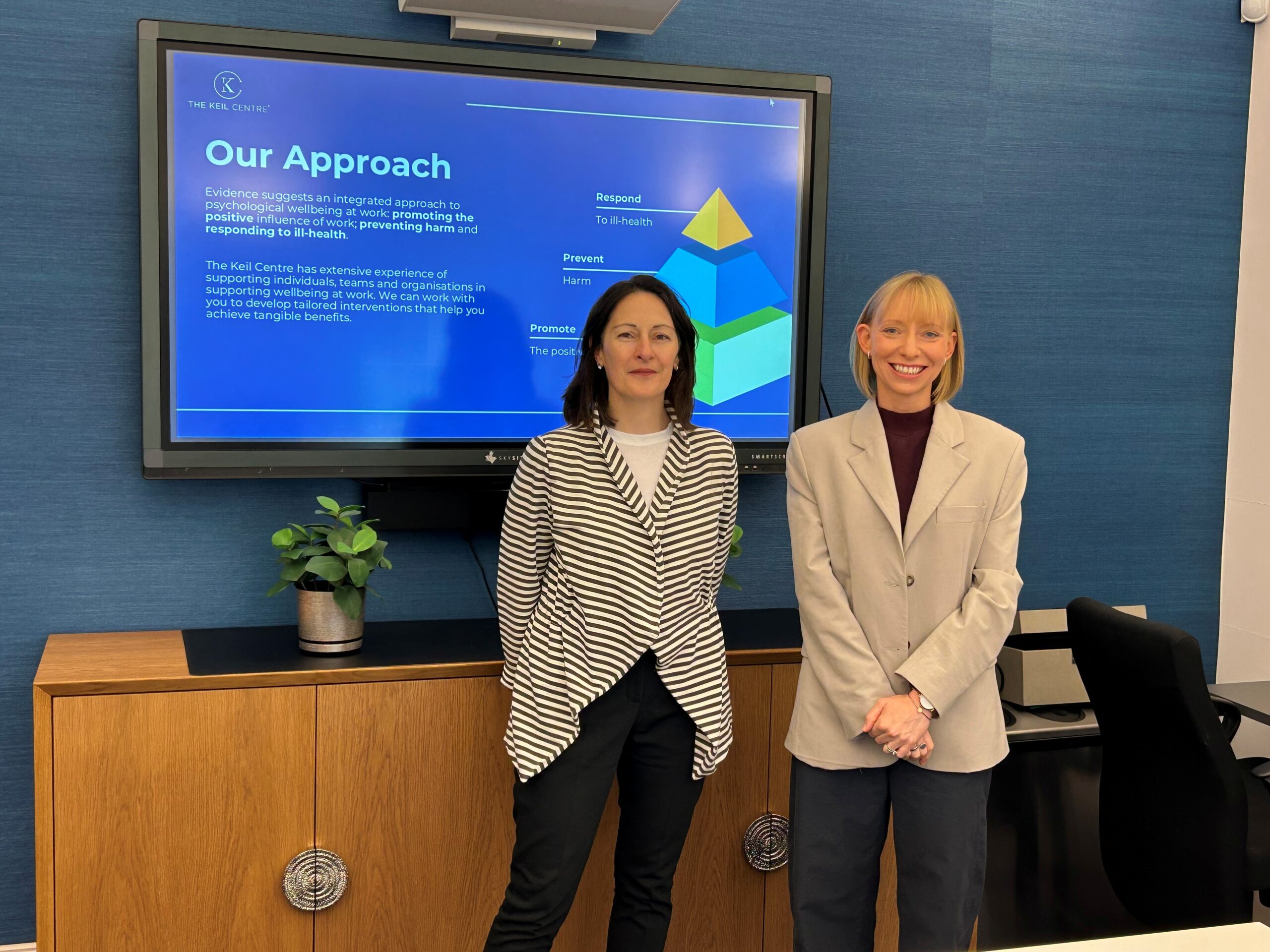
Our training can be delivered as a standalone intervention or as part of a broader programme that includes mental health consultancy, wellbeing strategy development, psychosocial hazard and stress risk assessment, coaching and leadership support.
Practical, evidence-informed learning
Our programmes combine evidence-informed psychology with practical tools and activities that participants can apply in their day-to-day working lives.
Depending on the programme, learning can include guided self-reflection, case studies, discussion, videos, practical exercises and personal action planning.
Our aim is not simply to raise awareness, but to help participants develop meaningful strategies and skills that support themselves and others at work.
Multi-disciplinary support
We have a multi-disciplinary team who can help with the range of wellbeing training support we offer.
Business and Occupational Psychologists
Our Business and Occupational Psychologists bring an understanding of the workplace, organisational systems and the factors that influence individual and team wellbeing.
Counselling Psychologists
Our Counselling Psychologists bring expertise in psychological wellbeing and common mental health difficulties, as well as specialist areas such as trauma and neurodiversity.
Useful external resources
For additional guidance on wellbeing, stress and mental health at work, you may find the following resources helpful:
HSE guidance on work-related stress
Guidance on managing work-related stress and supporting mental health at work.
View resourceCIPD resources on wellbeing
Resources on workplace wellbeing, people management and organisational support.
View resourceWHO fact sheet on mental health at work
Information on mental health at work and the importance of safe, healthy working environments.
View resource