
Why Trauma-Informed Interviewing Matters in Workplace Investigations
August 25, 2026
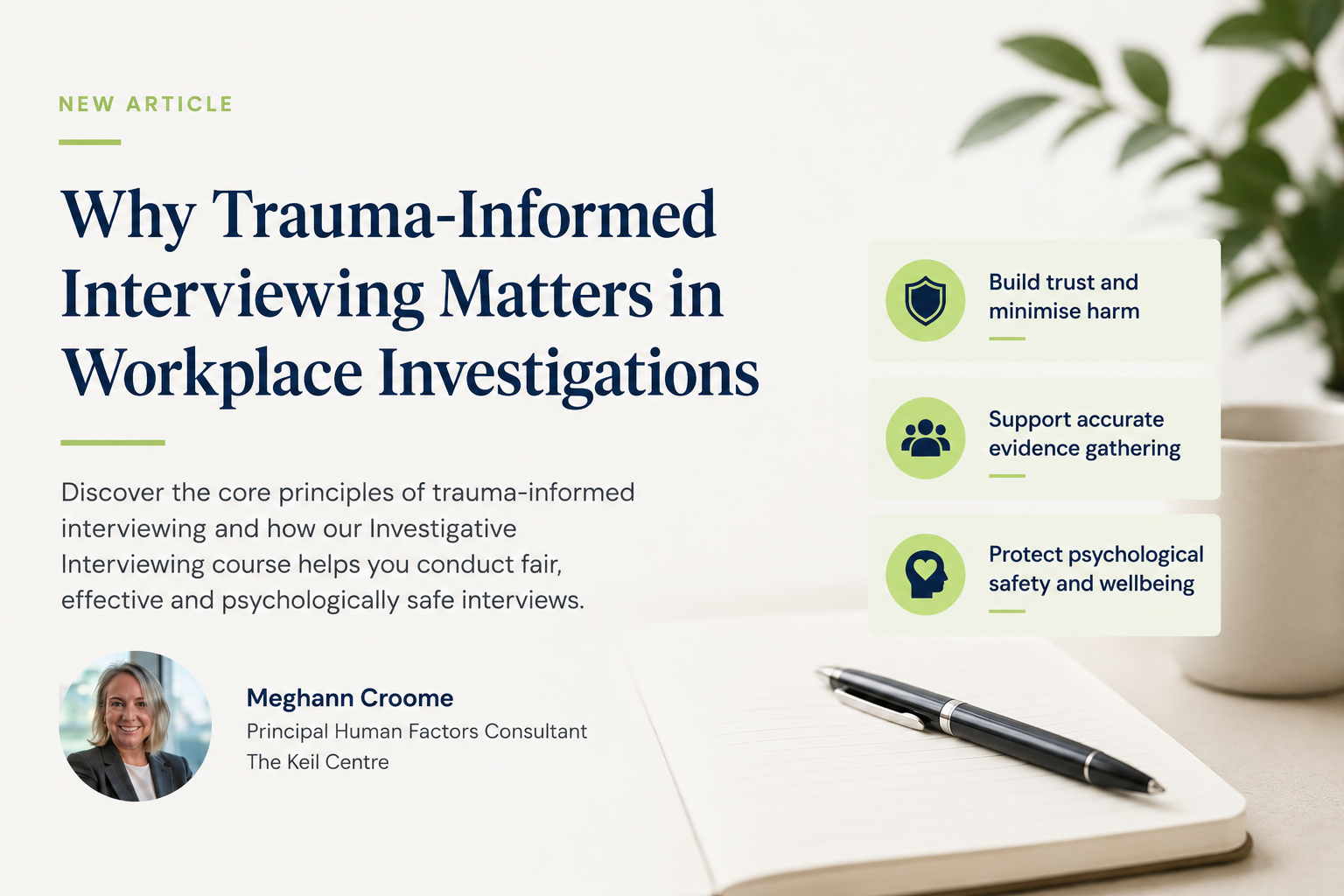



During June 2026 our Principal Human Factors Consultant in Australia, Meghann Croome provided a free webinar on the topic of Trauma Informed Investigative Interviews.
Why Trauma-Informed Interviewing Matters in Workplace Investigations
Investigative interviews are often the most sensitive part of any safety or human resources investigation. When allegations involve serious safety incidents of misconduct such as bullying, harassment or discrimination, the people you speak with may be carrying the weight of trauma. How you approach these conversations can make the difference between a process that feels fair and supportive - and one that causes harm or undermines trust.
What is Trauma?
Trauma is more than stress. It’s an emotional response to a distressing event that overwhelms a person’s ability to cope. In the workplace this could stem from witnessing or being part of a serious safety incident, harassment, violence or discrimination. Trauma affects memory, communication, and behaviour, meaning traditional interview techniques may fall short.
Why It Matters for Interviewers
Trauma can show up in many ways during an interview: memory gaps, emotional outbursts, avoidance, or even physical signs like shaking or hypervigilance. These are normal responses, not indicators of dishonesty. A trauma-informed approach helps you gather accurate information while minimising harm.
Core Principles of Trauma-Informed Interviewing
Safety: Create a private, calm environment and allow breaks.
Choice & Control: Give the interviewee agency over pacing and questions.
Empathy & Active Listening: Validate emotions without judgement.
Neutral Questioning: Use open prompts like “Tell me everything you remember” rather than leading questions.
How We Embed This in Our Investigative Interviewing Course
Our Investigative Interviewing course is designed to equip safety and HR professionals, safety leaders, and investigators with practical skills for conducting fair, effective, and psychologically safe interviews. The program covers:
- Cognitive Interviewing techniques to enhance memory recall
- Structured interview planning for accuracy and procedural fairness
- Active listening and rapport-building skills
- Managing distressed or defensive participants
- Trauma-Informed Interviewing principles, integrated throughout the course to ensure interviews minimise harm and support wellbeing
By the end of the course, participants can confidently apply best-practice methods that balance empathy with evidence gathering, ensuring investigations are robust, respectful, and legally defensible.
Bottom Line:
Trauma-informed interviewing isn’t just a “nice to have”, it’s a critical skill for anyone conducting workplace investigations. By integrating these principles into your approach, you protect psychological safety, build trust, and gather more accurate information. That’s why our Investigative Interviewing course embeds trauma-informed practices alongside cognitive interviewing techniques, giving you the confidence to handle even the most sensitive conversations with professionalism and care.
Watch the recording Reach out to Meghann