

Why Evidence-based Practice Makes Your Projects Smarter, Safer and More Successful
April 27, 2026
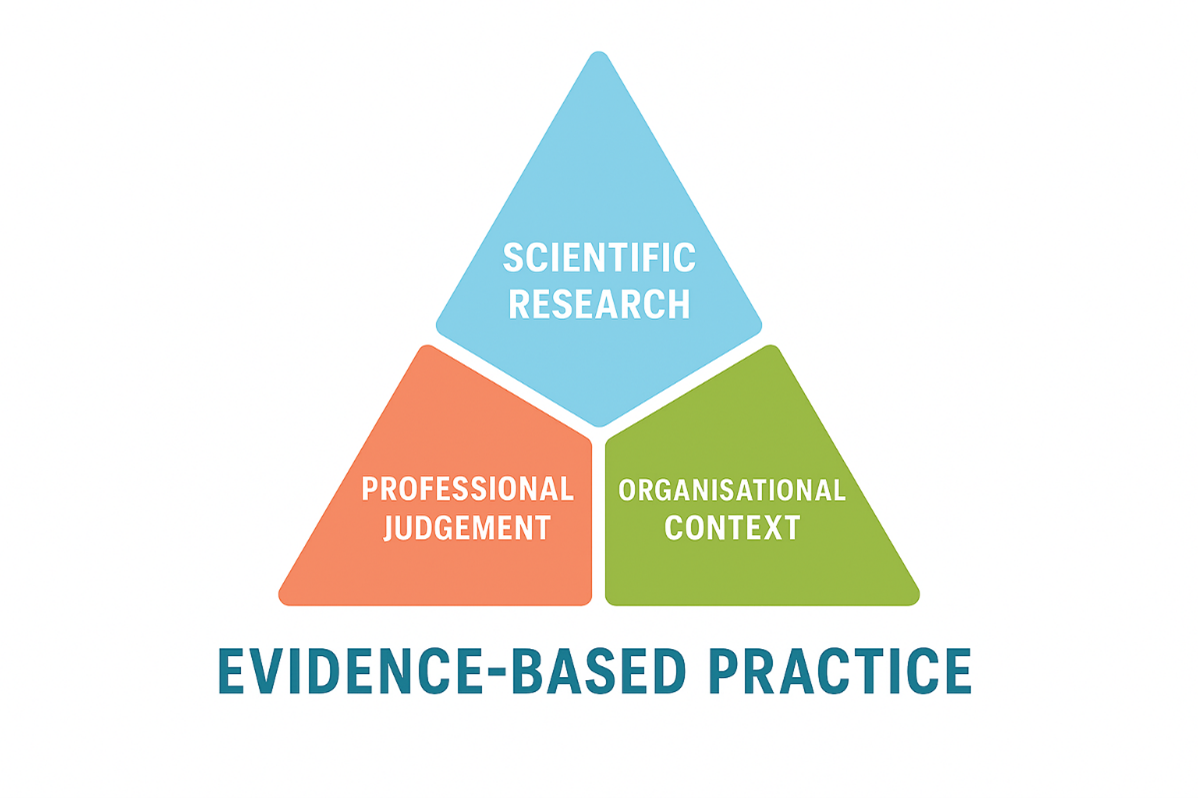



Evidence-Based Practice (EBP) combines research, expertise and real-world insight to create solutions that genuinely work. Here’s how we use it and why it changes everything.
What Evidence-Based Practice Really Means
If you’ve ever wondered why a Keil Centre consultant begins an engagement with a set of deep dive questions, the answer is simple: we’re being evidence-based. EBP is our version of due diligence‑ a structured way to understand your context before recommending any solution.
“Evidence-Based Practice isn’t a delay. It’s an investment that pays off every single time”
The Three Ingredients of EBP:
- Scientific Research - We start with the best available evidence from reliable studies, frameworks and sector insights.
- Professional Judgement - Our team brings experience, critical thinking and practical know‑how to interpret the data.
- Your Organisation’s Reality - We listen carefully to the lived experiences of your teams and the challenges beneath the surface.
Think of EBP as a recipe. If you only use one ingredient, the dish falls flat. Combine all three, and suddenly you’ve got something robust, reliable and tailored to your context - not a generic off-the-shelf fix.
Challenging Assumptions
Sometimes that means we’ll recommend something that may differ from what you originally asked for. Not because we’re being awkward, but because the evidence points to a better route. And when we do challenge your assumptions, we do it without judgement.
“Our job isn’t to criticise - it’s to help you succeed”
Evaluation
Another thing we take seriously is what happens after the intervention. We build in time to evaluate impact, learn what worked, and refine what comes next. Evaluation takes effort, but it’s the only way to know whether your investment is delivering real value. It’s also how we continuously improve our own practice.
Integrity
We’re proud of our professional identity and the ethical standards that guide our work. That means being honest, transparent and, very occasionally, saying “no thanks.” If the evidence suggests an approach won’t work or won’t deliver the anticipated value, we’ll tell you. Not to be difficult, but because integrity matters.
Evidence-based Practice helps us help you. It ensures your people‑focused projects are grounded in science, shaped by insight and designed for real-world impact. And that’s a process worth trusting.