

Psychometrics-Based Coaching: Seeing What Others See
April 27, 2026



“O wad some Pow’r the giftie gie us
To see oursels as ithers see us!”
When Robert Burns wrote that line, he was remarking on something simple and yet potentially uncomfortable: the ability to see ourselves as other people see us.
We think we know ourselves – our strengths, our intentions, our reasons for acting the way we do. But how do we come across others? That’s where things become less clear.
You’ve probably met someone who insists they’re “clear and efficient,” while their team quietly experiences them as abrupt or intimidating. That gap between intention and impact? That’s where coaching, especially with the insight from psychometrics, earns its place and can be incredibly useful.
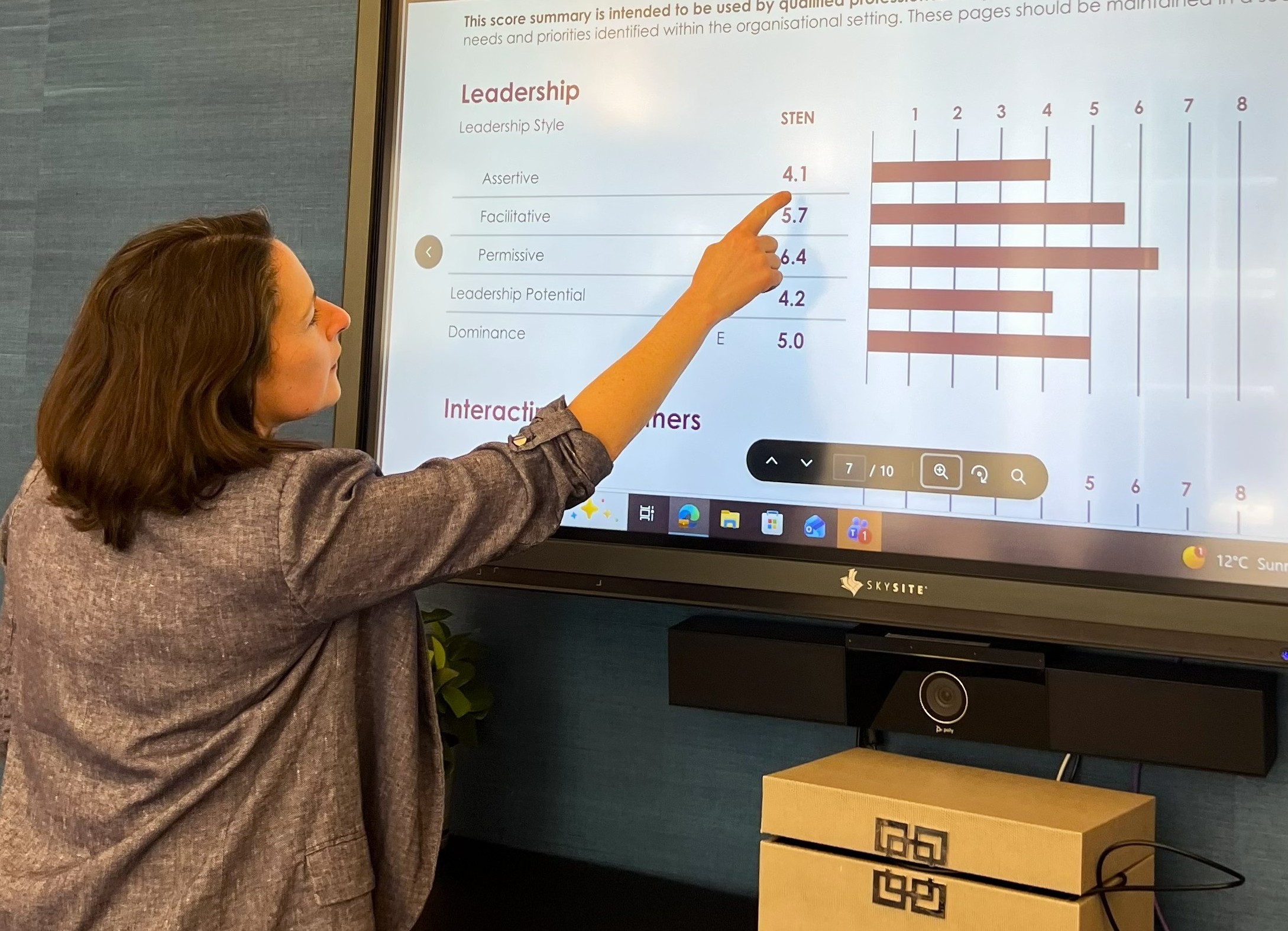
Coaching can offer an opportunity to pause, to reflect and to develop greater self-awareness – coaching coupled with psychometric insight can ‘super-charge’ this reflection, offering depth of insight and creating more lasting change.
How do we use Psychometrics in coaching?
- Psychometrics can help understand your style, your strengths, your values and motivations, your team role/s and also your potential derailers. There are many tools and we would choose the one that best supports your coaching goals.
- Psychometric data is used as a starting point for the coaching conversation to develop self-awareness and insight into your leadership style and strengths; .
- Understanding your preferred style allows a deeper and richer coaching conversation, exploring patterns in tone, pace, emotional intensity, the tendency to ‘take over’, withdraw, smooth things over, or push too hard. These patterns can be visible to others before we recognize them ourselves.
- Psychometric-based coaching helps illuminate blind areas. Not harshly, and not as a verdict, but as data to explore. It provides language for experiences that may have felt vague or confusing.
- These coaching conversations can also help you to understand your ‘stretch’, which are your natural behaviours are and which you might need to develop more intentionally.
When used well, psychometric tools aren’t about boxing people in. They’re more like a structured mirror. They highlight behaviour patterns such as how you respond under pressure, how you make decisions, how you communicate, what drives you, what drains you. Such in-depth exploration enables certain moments to make sense. The feedback that puzzled you. The recurring tension in a relationship. And the reason you feel energised in one environment and depleted of enthusiasm in another.
“When patterns become visible, choices become possible” says Ken Gray, Occupational Psychologist
A psychologist should not simply hand over a report and leave you to interpret it alone. They provide context. They ask thoughtful questions. They help you distinguish between strengths and overused strengths. They create space to reflect without judgement. Insight, handled well, is not about criticism. It is about choice. When people begin to understand their patterns, something shifts. Reactions become options. Habits become conscious decisions. Instead of repeating the same dynamics, they can choose to respond differently.
We may not possess the magical “giftie” Burns imagined. But through psychometrics and skilled psychological guidance, we can move much closer to seeing ourselves as others see us. That clarity is one of the most powerful foundations for growth.
Find out more about coaching